
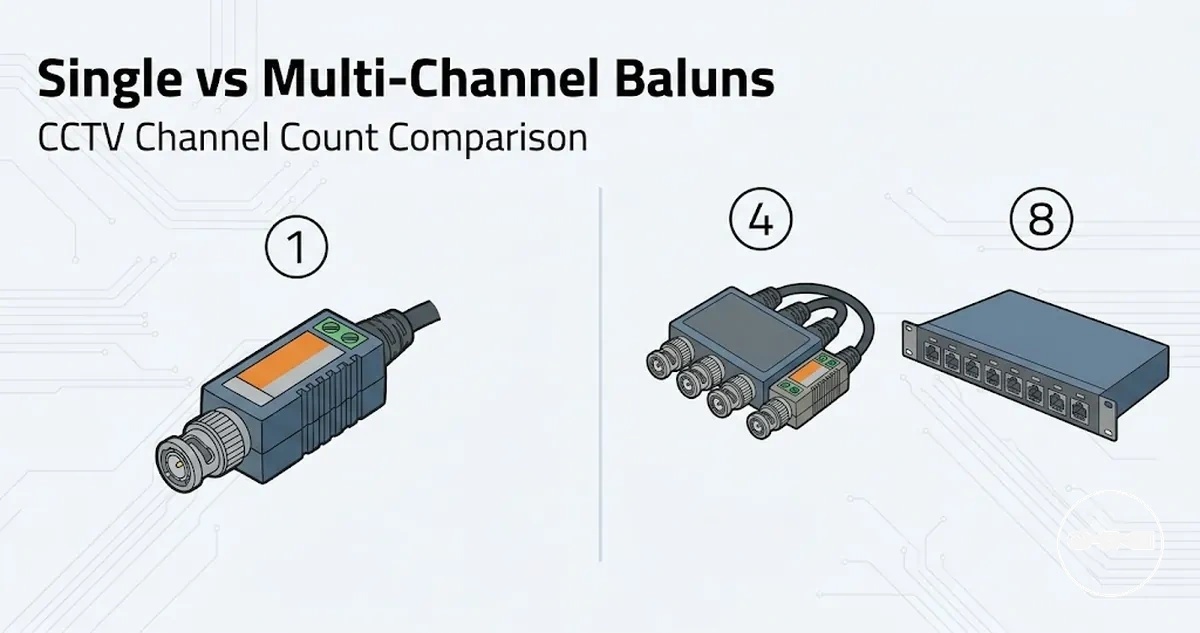
Single-Channel vs Multi-Channel CCTV Video Baluns: Channel Count Comparison and System Selection Logic
CCTV video baluns system compares single-channel and multi-channel configurations based on how many independent video signals are transmitted through the same cabling structure. The primary distinction is channel count, which directly shapes whether the system is designed for isolated point-to-point transmission or consolidated multi-camera routing across a shared infrastructure.
Selection between single-channel and multi-channel CCTV video baluns depends on system design priorities such as simplicity and scalability. Single-channel setups usually align with simpler, isolated camera deployments where each feed follows a dedicated path, while multi-channel configurations support more scalable architectures where multiple camera signals are consolidated through shared cabling strategies. The choice typically reflects how the CCTV system balances straightforward installation needs against future expansion and cabling efficiency requirements.
What CCTV video balun channel count means in CCTV transmission architecture and system scaling
Channel count in CCTV video baluns is the number of independent video signal paths a system can carry through a balun setup. It defines how many separate camera feeds can be transmitted within a given transmission architecture and directly reflects the system’s signal capacity at a structural level.
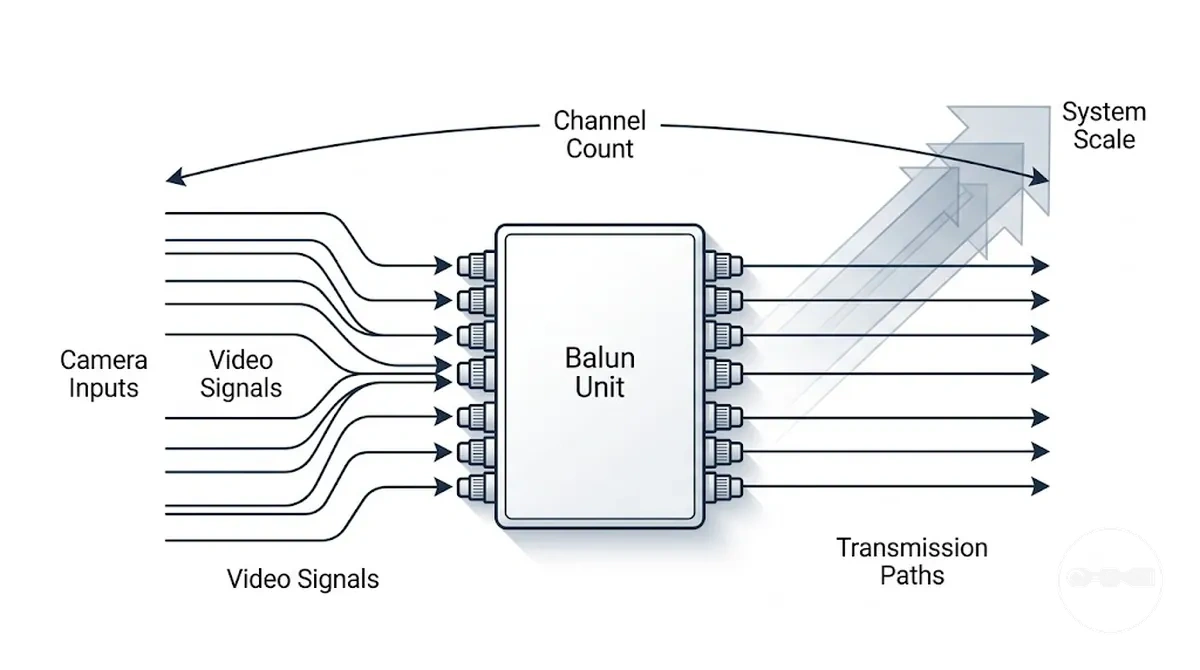
Channel count does not determine resolution or signal format, as those are separate attributes of the CCTV transmission chain. Instead, it influences how a system scales in terms of camera distribution and cabling design, especially when moving from single-feed layouts to multi-feed architectures. This distinction helps prevent confusion between signal quality characteristics and transmission capacity structure. Further context can be related to the broader system structure in CCTV video baluns overview.
Single-channel CCTV video baluns for one-camera transmission and point-to-point setups
Single-channel CCTV video baluns for one-camera transmission and point-to-point setups refer to a configuration where a single CCTV camera signal is carried through one dedicated transmission path to one receiving endpoint. The single-channel structure keeps the video feed isolated within its own balun link, supporting a direct one-to-one signal routing architecture in CCTV systems.
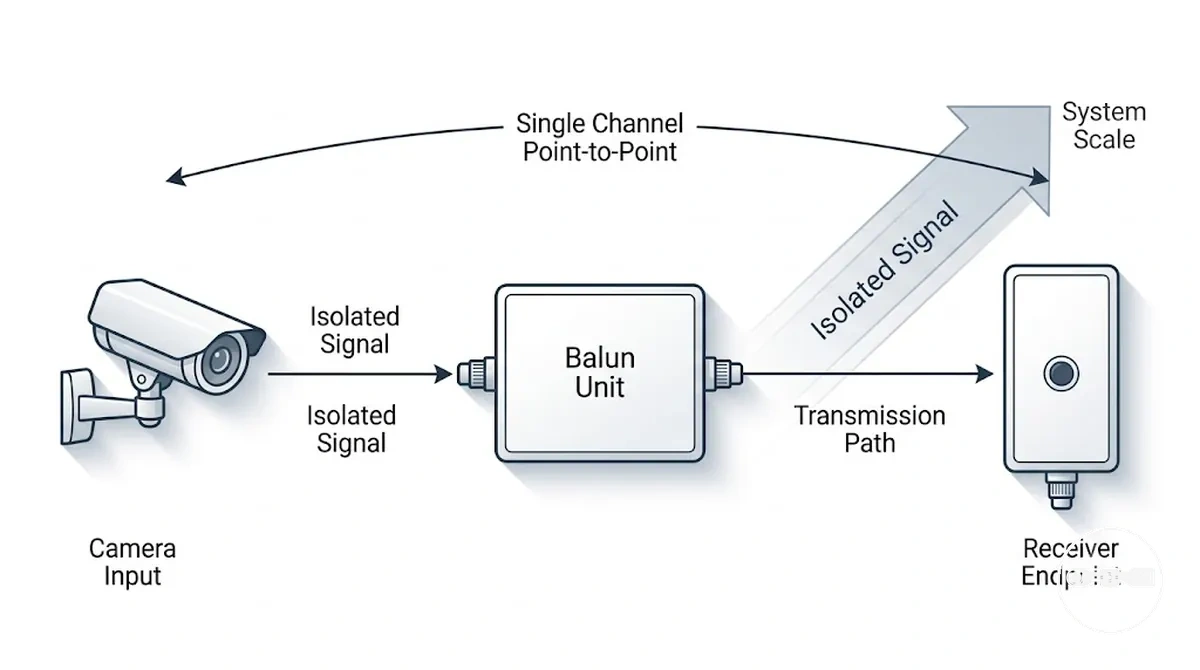
This architecture is used in CCTV video balun deployments where each camera requires an independent transmission line, allowing simplified signal routing and predictable wiring structure. It is typically applied in setups where system layout prioritizes clarity and isolated feeds under stable installation conditions, depending on cabling environment and design constraints. A structured selection approach can be reviewed through the CCTV video balun selection checklist.
Multi-channel CCTV video baluns for multi-camera transmission over a single CAT5/CAT6 line
Multi-channel CCTV video baluns for multi-camera transmission over a single CAT5/CAT6 line refer to a consolidated CCTV transmission architecture where multiple camera feeds are grouped into a shared twisted-pair cabling medium. This multi-channel structure manages several independent video signals through one coordinated balun system, enabling structured signal aggregation within a single transmission line.
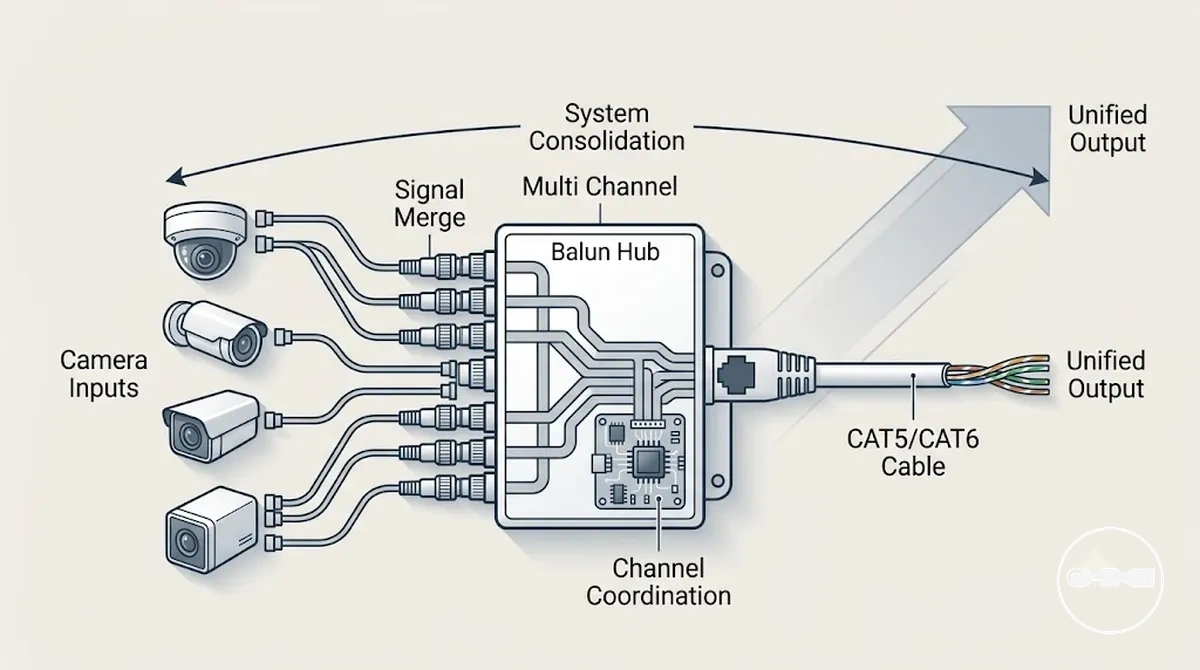
This architecture emphasizes system consolidation, where multiple feeds are organized into a unified transmission path to reduce overall cabling complexity. It also introduces increased coordination requirements between channels, and system behavior may vary depending on cable quality, distance, and layout conditions. Cable dependency considerations can be reviewed in cable planning for baluns as part of broader system design decisions.
4-channel and 8-channel CCTV video baluns: density, scalability, and hub-style configurations
4-channel and 8-channel CCTV video baluns represent higher-density aggregation configurations that group multiple independent camera signals into a single coordinated transmission unit. Channel density in these systems refers to how many video inputs are combined within one balun structure, enabling more compact signal handling while maintaining separate feed paths over twisted-pair cabling.
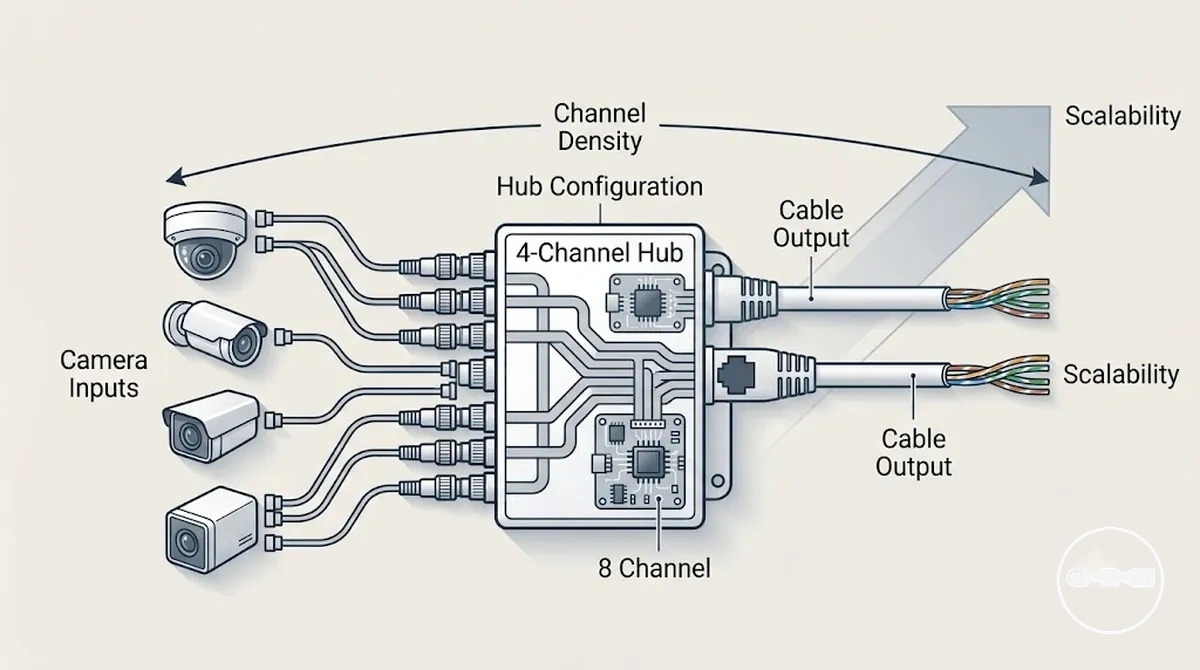
This density-based architecture is used when system expansion requires reducing the overall cabling footprint while increasing the number of camera inputs per connection point. Planning implications typically include how signals are grouped, how expansion is staged, and how cable quality and distance conditions may influence performance behavior. Broader cost evaluation and deployment trade-offs can be reviewed through cost and value checks when scaling system capacity.
Single vs multi-channel balun performance differences in signal stability, distance, and interference handling
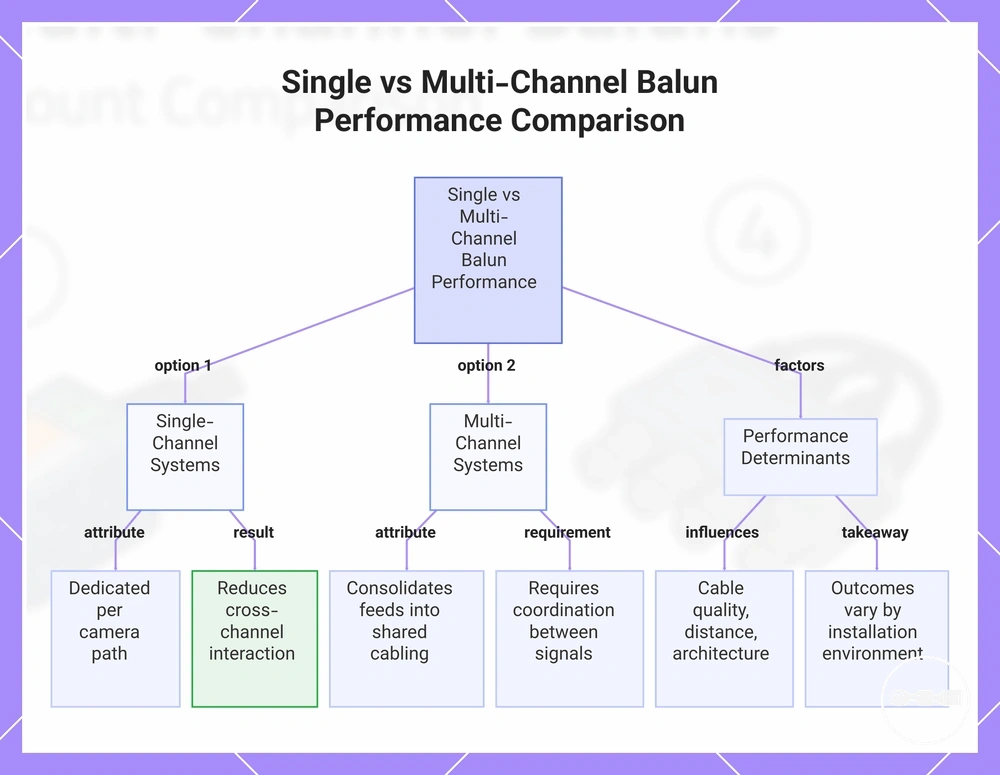
Single-channel and multi-channel CCTV video baluns differ in signal stability, interference exposure, and transmission consistency across different deployment conditions. Single-channel systems typically isolate each camera feed into a dedicated transmission path, which can reduce cross-channel interaction, while multi-channel systems consolidate multiple feeds into shared cabling, where stability and interference behavior may vary depending on how signals are grouped and distributed.
Signal behavior in both configurations is conditional and depends on factors such as cable quality, transmission distance, and overall system architecture. Single-channel setups may provide more consistent isolation per feed in some layouts, while multi-channel setups may require additional coordination between signals, especially in higher-density installations where multiple channels share the same physical medium. Outcomes therefore vary by installation environment and system design rather than following fixed performance rules.
This chart compares single-channel and multi-channel CCTV video balun performance across signal stability, interference, and transmission, highlighting key differences and dependency factors.
Compatibility requirements for multi-camera CCTV balun setups across analog HD formats and cable types
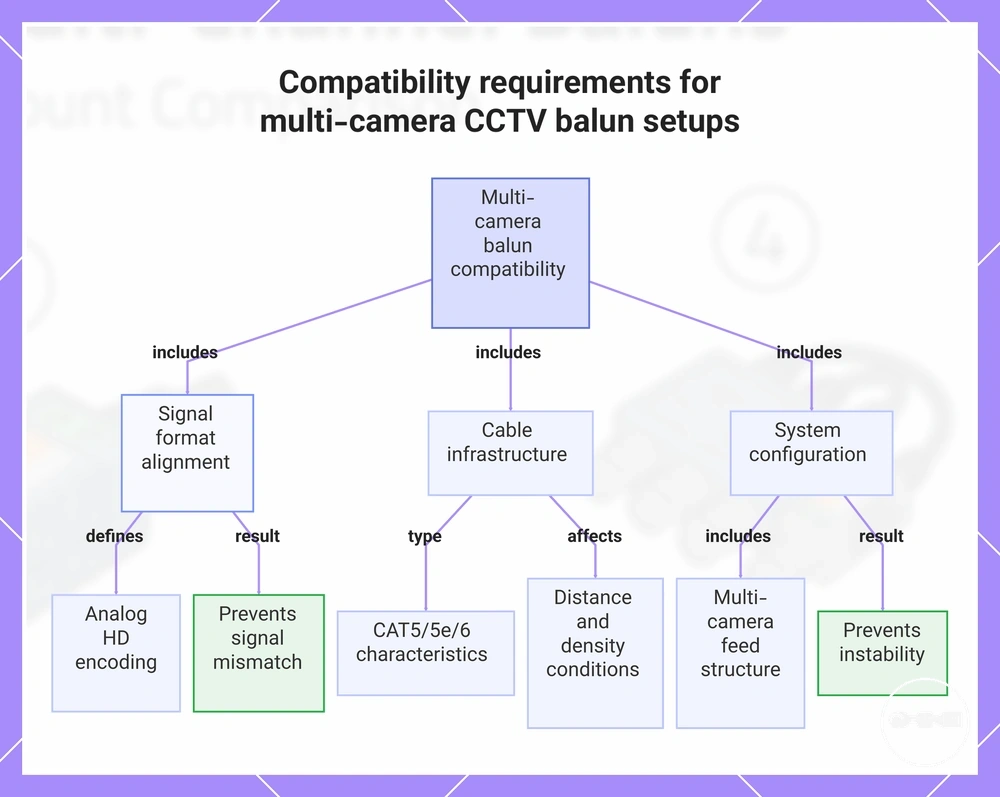
Compatibility in CCTV video baluns is defined as the alignment between signal format, cable type, and overall system configuration in multi-camera setups. It determines whether different components can operate together within the same transmission architecture without signal mismatch or instability, especially when multiple channels are involved.
System compatibility depends on how analog HD formats are matched with CAT5/CAT5e/CAT6 infrastructure and how the balun system is structured across multiple camera feeds. Cable characteristics influence how signals are carried over distance and density conditions, while format requirements define how video data is encoded and transmitted. This dependency structure is commonly considered in cable planning for baluns, and also extends to termination quality and connector matching, as addressed in connector and termination options.
This chart shows the three main factors defining compatibility in multi-camera CCTV balun setups: signal format alignment, cable infrastructure, and system configuration.
Multi-channel CCTV video balun wiring architecture and CAT5/CAT6 distribution layouts
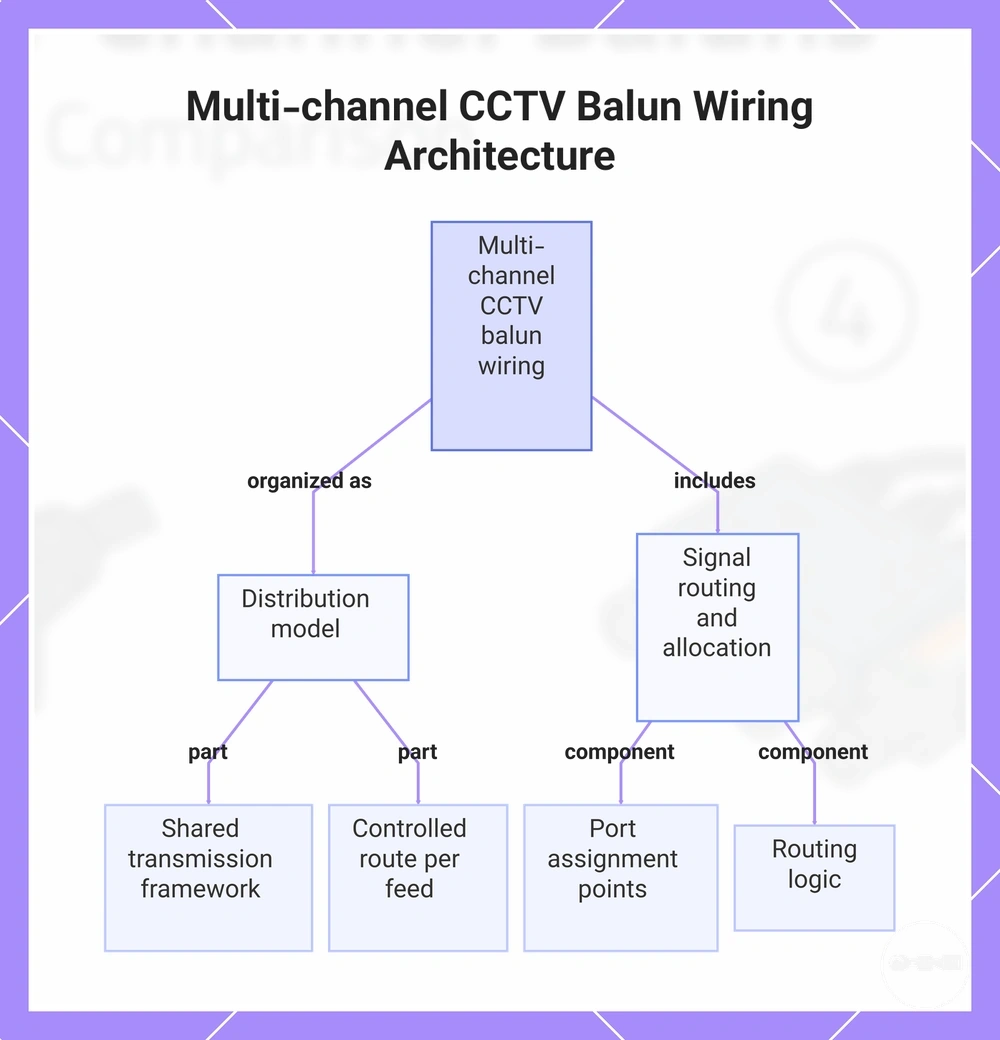
Multi-channel CCTV video balun wiring architecture describes a structured distribution model where multiple camera signals are organized across CAT5/CAT6 infrastructure through defined channel routing paths. This layout treats the cabling system as a shared transmission framework in which each camera feed is assigned a controlled route within the overall multi-channel structure.
Within this architecture, signal routing and port allocation define how camera inputs are mapped across available channels and distributed through the network layout. Each port functions as an assignment point that connects a specific camera feed to a corresponding transmission path, while routing logic determines how signals are carried through the system based on configuration design and channel density. This system-level mapping approach is detailed in wiring multi-channel baluns, which explains how distribution structures are organized across multi-channel deployments.
This chart explains the structured distribution model and signal routing logic that define how multiple camera feeds are organized across CAT5/CAT6 infrastructure using balun wiring.
Selection criteria for choosing between single-channel and multi-channel CCTV baluns based on project size and expansion needs
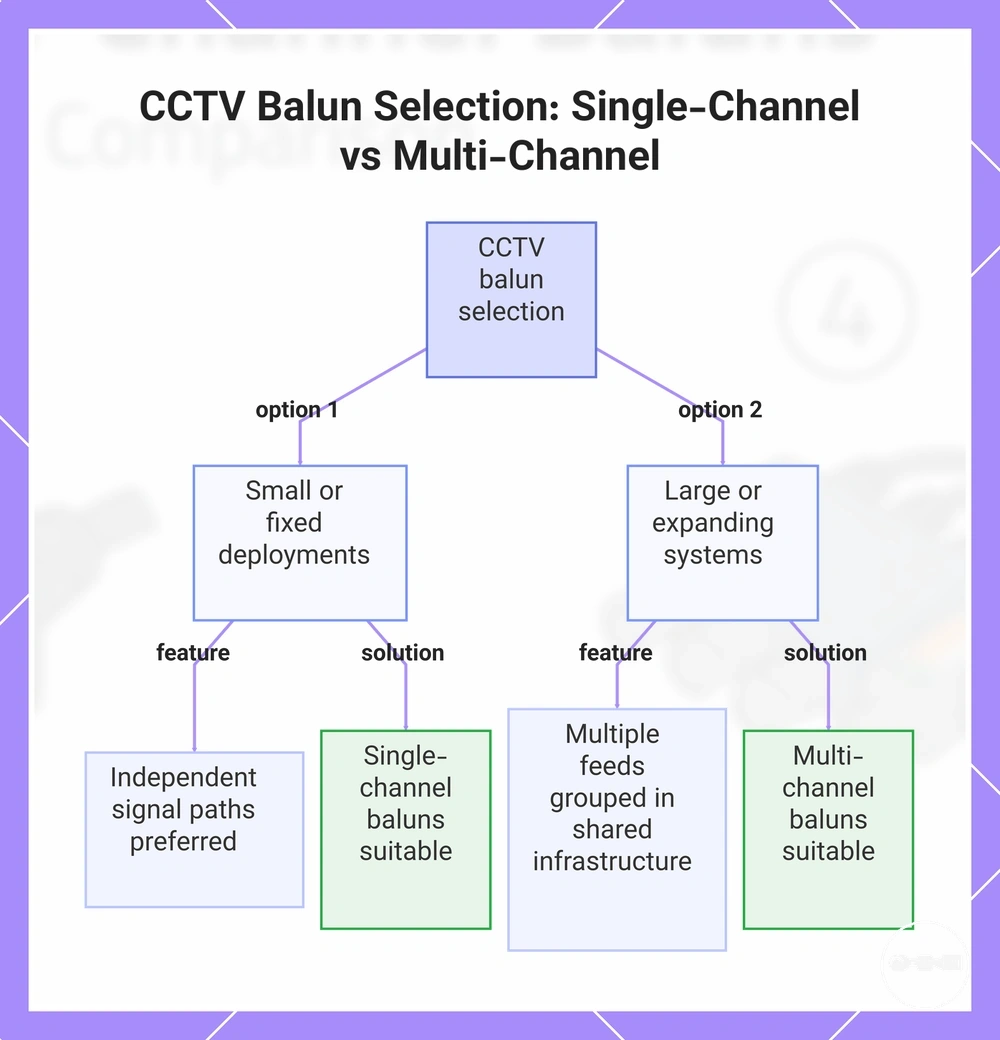
CCTV video baluns selection depends on camera count, project size, and expansion requirements across the system lifecycle. The decision is shaped by how many camera feeds need to be supported initially and how the system is expected to scale, since single-channel and multi-channel configurations respond differently to growth in channel demand and layout complexity.
Selection logic is based on balancing simplicity against consolidation needs. Single-channel structures may align with smaller or fixed camera deployments where independent signal paths are preferred, while multi-channel structures may suit larger or expanding systems where multiple feeds are grouped within shared infrastructure. A structured reference for these decision criteria is provided in the CCTV video balun selection checklist, which outlines how layout planning and expansion expectations influence configuration choice.
This chart shows the two main deployment scenarios and corresponding balun types based on project size and expansion expectations.
Cost efficiency and cable reduction trade-offs in single-channel vs multi-channel CCTV balun systems
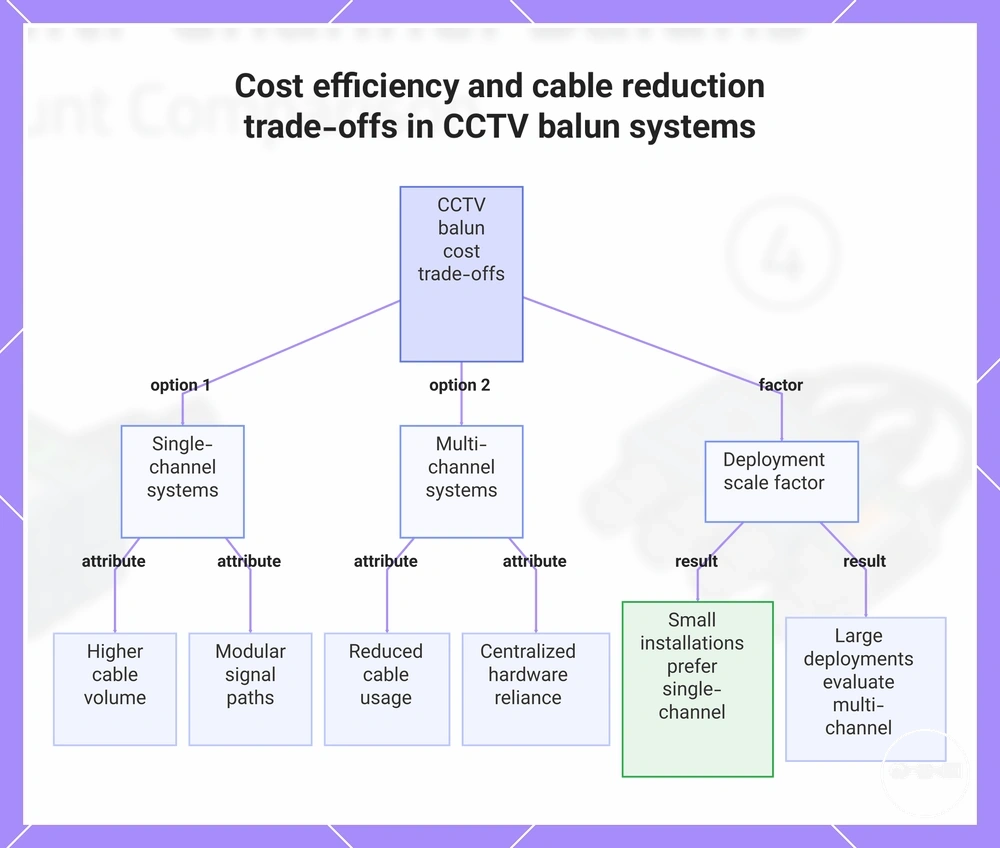
CCTV video balun cost efficiency is driven by how cabling load and hardware distribution are structured across single-channel and multi-channel architectures. Single-channel systems typically spread deployment across individual links, which can increase cabling volume but keep signal paths modular, while multi-channel systems consolidate multiple feeds into shared infrastructure, reducing cable usage but increasing reliance on centralized hardware handling.
Cost-value interpretation depends on deployment scale and system efficiency needs. Smaller or fixed installations may prioritize simpler single-channel layouts where expansion is incremental, while larger deployments often evaluate multi-channel configurations based on cable reduction and consolidated routing benefits. These trade-offs in structural efficiency are commonly assessed through cost and value checks, which frame how system design choices impact long-term infrastructure planning.
This chart compares the trade-offs between single-channel and multi-channel CCTV balun architectures, including cable volume, modularity, and how deployment scale affects selection.
Common mistakes in multi-camera CCTV balun setups and how channel misconfiguration affects signal quality
Channel misconfiguration in multi-channel CCTV video balun systems refers to incorrect mapping, pairing, or assignment of camera feeds across available transmission channels. These errors typically occur when input signals are not aligned with their intended ports or when multi-channel distribution is not consistently matched to the system layout structure.
Such misalignment can lead to signal quality issues such as intermittent loss, interference patterns, or reduced clarity across specific channels, especially when multiple feeds share the same transmission infrastructure. These effects are typically linked to how signals are organized within wiring multi-channel baluns structures. In most cases, signal stability improves when channel mapping and logical alignment between inputs and outputs are corrected according to system configuration requirements.