
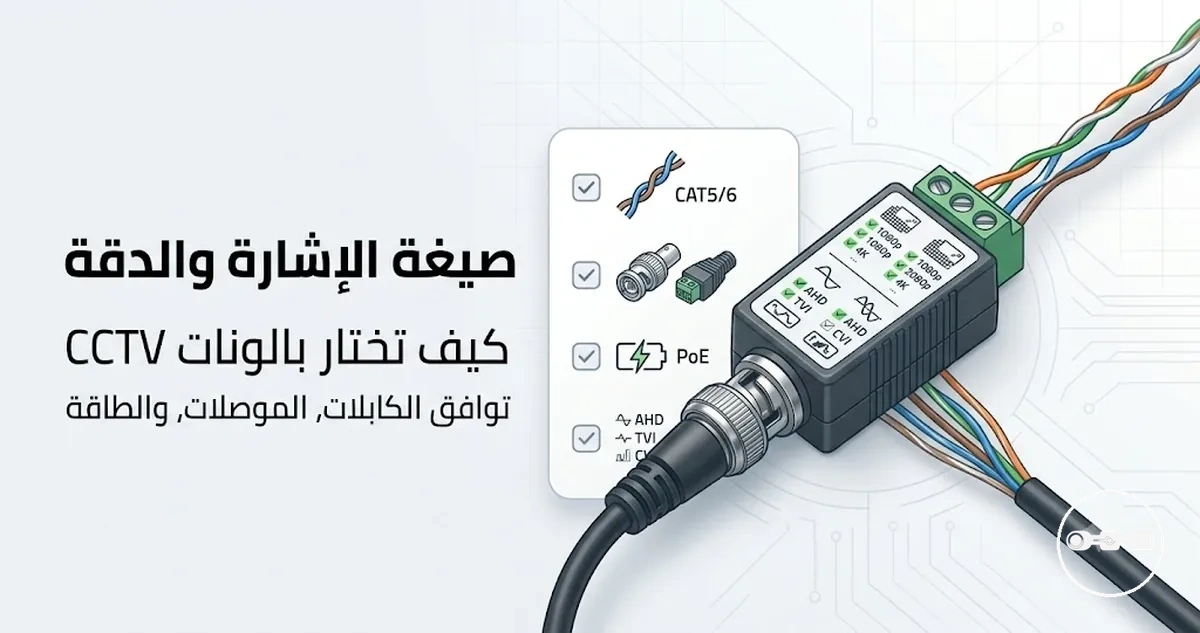
CCTV Video Balun Selection Guide: Compatibility, Type, Power, and Channel Planning Checklist
The CCTV video balun selection checklist is a decision framework used to determine which CCTV video balun is suitable based on compatibility requirements, system type, and installation setup conditions. It helps define how signal transmission behaves across different UTP cable setups and how these choices align with the overall security camera system design. The focus is on understanding what must match between components before installation decisions are made.
Selection outcomes depend on multiple interdependent factors rather than a single specification. Compatibility between the CCTV video balun and UTP cable type influences signal transmission stability and usable distance, while installation setup conditions shape how reliably the system performs in real environments. Additional decision dimensions include balun type selection, power requirements in the system design, and channel planning for multi-camera layouts, all of which work together to define the final configuration.
Core Selection Criteria for Choosing the Right CCTV Video Balun
CCTV video balun selection criteria define the set of decision factors used to evaluate which CCTV video balun is suitable across different installation scenarios. These criteria focus on how compatibility, signal quality, distance limits, and system conditions influence overall signal transmission behavior within a CCTV video balun setup. The goal is to ensure each selection decision aligns with real installation requirements rather than isolated specifications.
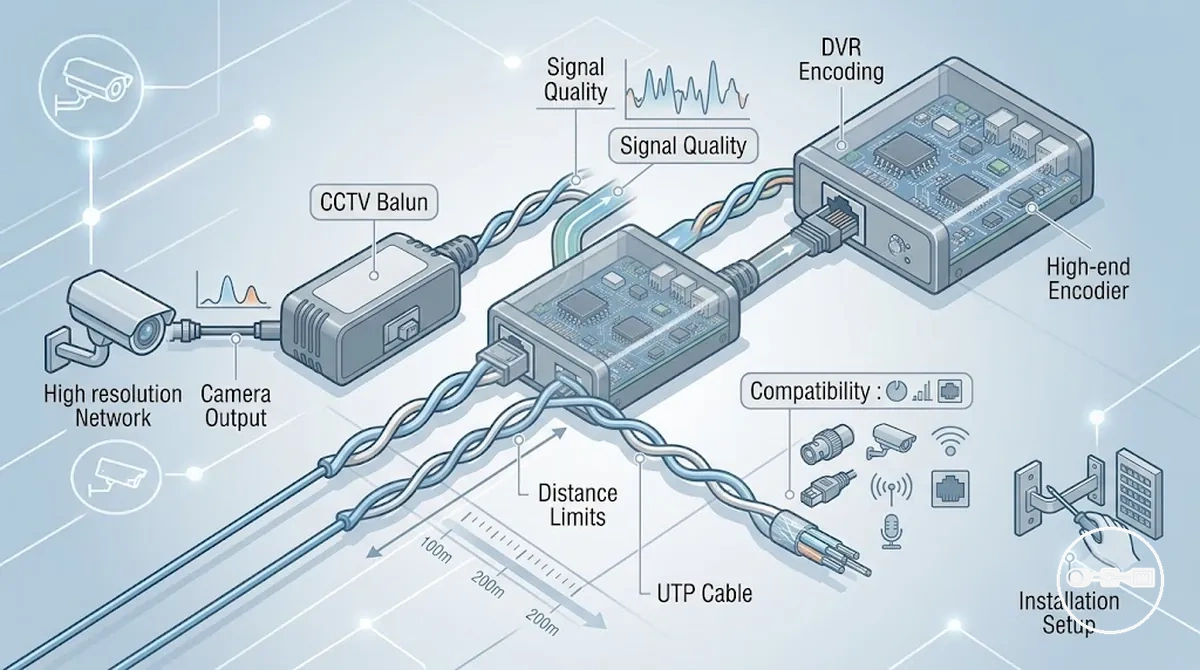
Selection depends on multiple interdependent factors that must be evaluated together to avoid mismatched system performance. Compatibility factors, UTP cable conditions, installation environment, and signal transmission requirements each influence how the CCTV video balun behaves under real installation conditions. These variables work together to determine whether signal quality and system stability remain acceptable within the intended setup.
- Signal quality: When cable condition or installation noise increases, signal quality may reduce, affecting overall transmission clarity and stability in the CCTV video balun setup.
- Distance limits: When UTP cable runs increase or layout complexity grows, distance limits can reduce effective signal transmission stability.
- Compatibility factors: When connected devices or formats do not align, compatibility issues may affect proper signal transfer through the CCTV video balun.
- Installation environment: When electrical interference or physical conditions vary, installation setup reliability may influence consistent signal performance.
- System design constraints: When camera and DVR configuration scales change, overall system design can affect how balanced and stable the final selection performs.
Active vs Passive CCTV Video Baluns and When Each Type Is Suitable
Active and passive CCTV video baluns are two functional types used to manage how video signals are transmitted over UTP cable in a CCTV system. The distinction lies in how each CCTV video balun handles signal processing, which affects compatibility, transmission distance, and system scale in different installation setups.
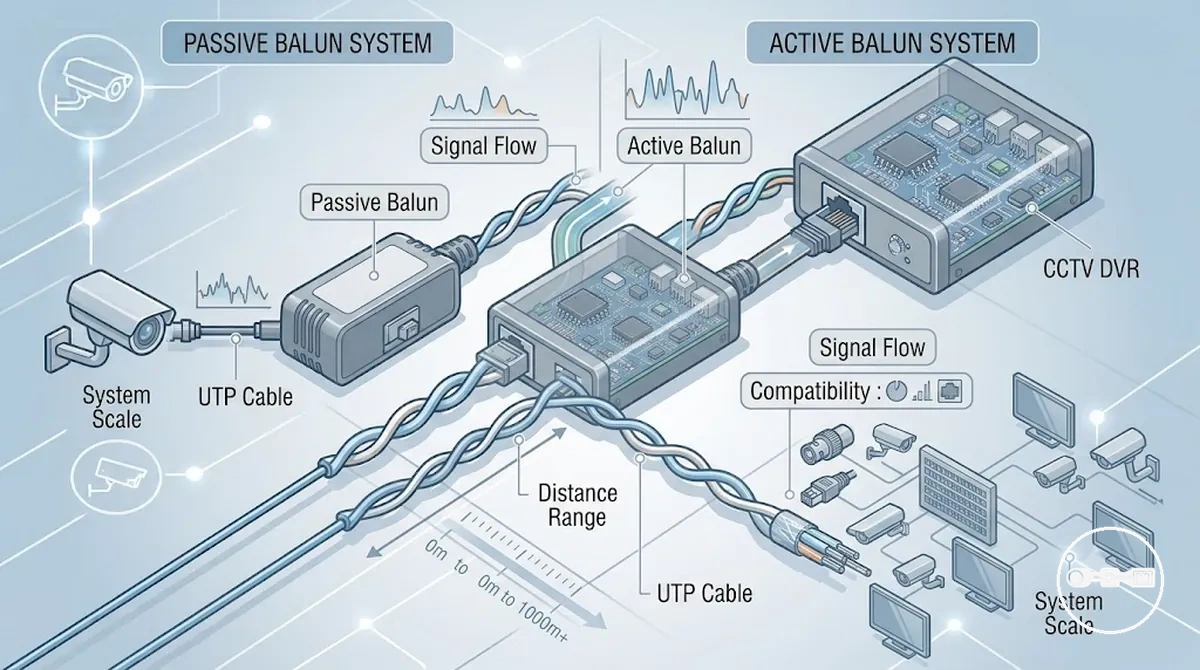
Selection between these two types depends on installation requirements and signal conditions, especially when evaluating how transmission behaves across different system scales and environments. A correct active or passive balun choice is typically based on required signal handling level and how the CCTV video balun integrates within the overall transmission setup.
Passive CCTV video baluns generally rely on basic signal conversion without amplification, while active CCTV video baluns may include signal processing functions that help maintain more stable transmission depending on system conditions.
| Type | Signal handling | Distance | Use case |
|---|---|---|---|
| Passive balun | Basic conversion without signal amplification | Typically suited for shorter UTP cable runs depending on setup | Small to medium CCTV installations with stable environments |
| Active balun | May include signal processing or enhancement functions | Can support longer transmission distance depending on system design | Larger or more complex CCTV systems with higher signal demands |
In practical decision scenarios, passive CCTV video baluns are often used in simpler installations with shorter cable runs and stable conditions. Active CCTV video baluns are typically considered when system scale increases or when signal stability needs to be maintained across more demanding installation environments. The final decision depends on compatibility factors, UTP cable layout, and overall system design requirements.
Cable Compatibility Requirements for CAT5, CAT5e, and CAT6 Installations
Cable compatibility for CAT5, CAT5e, and CAT6 installations defines how different Ethernet cable grades affect CCTV video balun performance in terms of signal stability, interference resistance, and transmission distance. The choice of cable type influences how consistently the CCTV video balun can maintain usable video transmission across different installation conditions and system layouts.
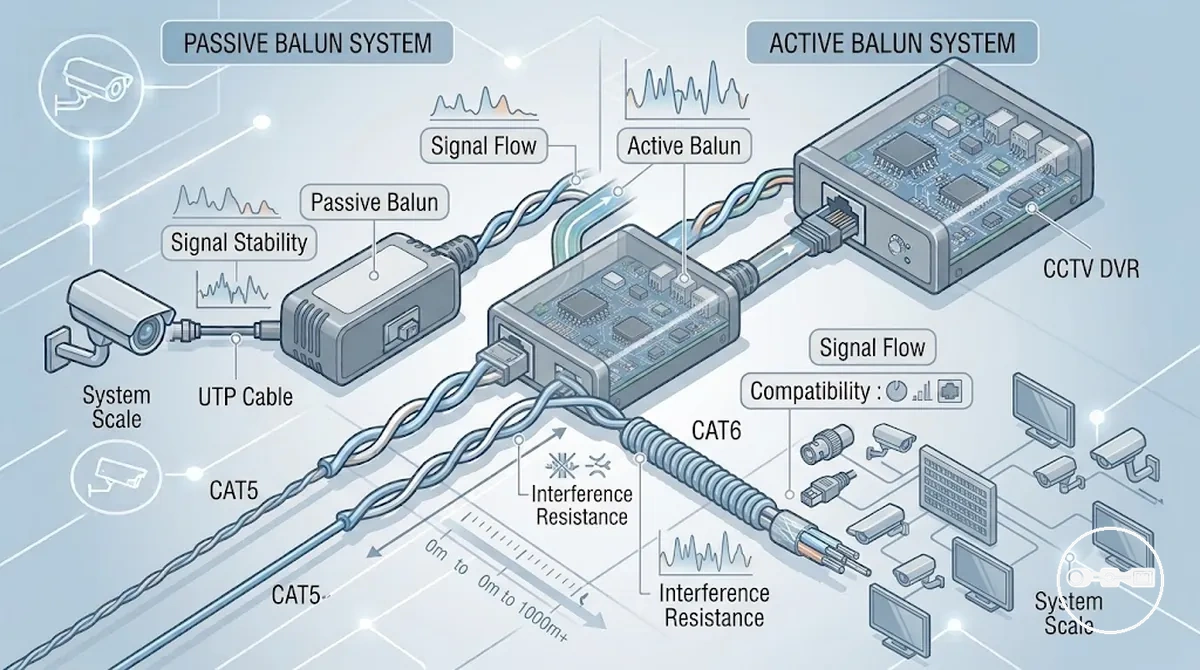
Cable grade directly affects how a CCTV video balun performs under varying installation conditions, especially when considering noise levels, cable length, and system scale. For a deeper breakdown of how each cable type impacts performance, see the cable compatibility guide for structured selection differences between CAT5, CAT5e, and CAT6.
CAT5, CAT5e, and CAT6 cables differ in how they handle interference and maintain signal quality in CCTV video balun systems. CAT5 is generally more sensitive to interference over longer runs, CAT5e improves stability under moderate conditions, and CAT6 typically provides stronger interference resistance and more consistent signal behavior in higher-demand installations.
| Cable type | Stability | Distance | Use case |
|---|---|---|---|
| CAT5 | Lower stability under interference | More suitable for shorter runs depending on environment | Basic CCTV setups with minimal noise conditions |
| CAT5e | Improved stability over CAT5 | Supports moderate transmission distances in typical setups | Standard CCTV installations with balanced requirements |
| CAT6 | Higher interference resistance | More consistent performance across longer or complex runs | Higher-demand CCTV systems with stricter signal conditions |
In practical CCTV video balun installations, cable selection depends on system scale, environmental interference, and required signal stability. CAT5 may be sufficient for simple layouts, while CAT5e is often used in standard installations with moderate distance needs. CAT6 is typically considered when installation environments demand higher interference resistance and more stable signal transmission across complex cable routing.
Connector and Termination Options for Reliable CCTV Video Balun Setup
Poor termination in a CCTV video balun connector setup can degrade or interrupt video transmission and reduce signal integrity. Connector quality and termination accuracy directly influence how consistently a CCTV video balun maintains stable signal transfer between the camera and recording system, especially under variable installation conditions.
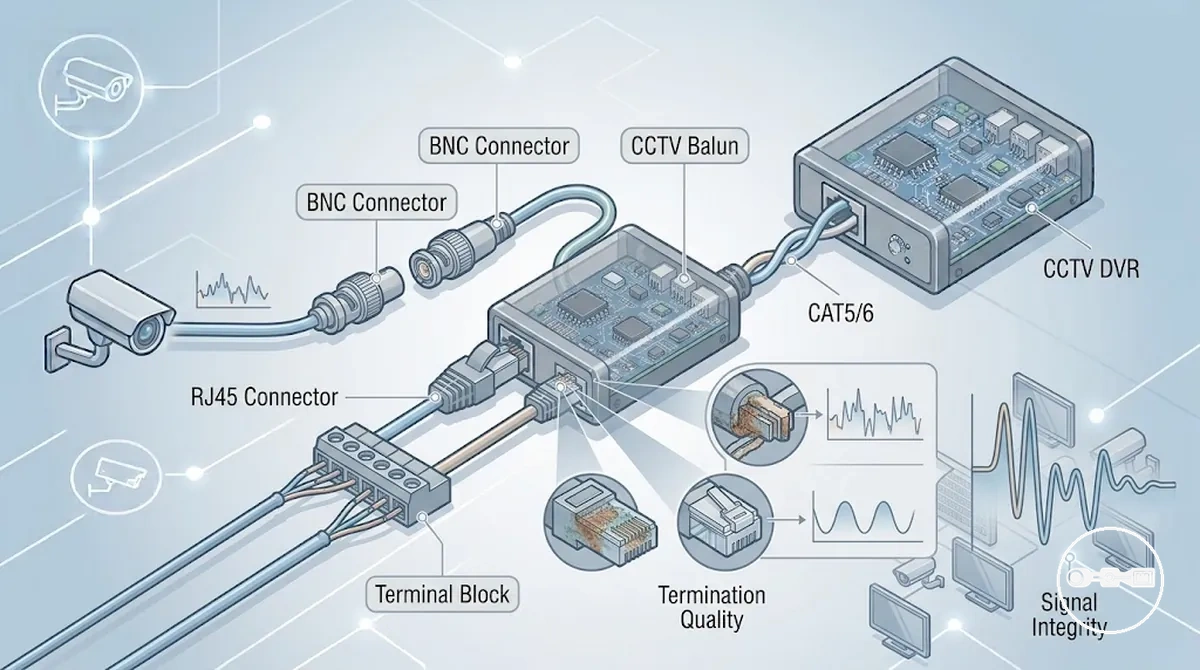
Connector and termination selection depends on how each interface type affects signal integrity, installation stability, and long-term reliability in different CCTV layouts. A structured view of CCTV video balun connectors and termination options helps clarify how different connection methods influence performance outcomes across varied system configurations.
- BNC: Often used for direct video interface connections where stable physical locking helps maintain consistent signal integrity in CCTV video balun setups.
- RJ45: Common in structured cabling systems, supporting flexible integration with UTP-based CCTV video balun installations depending on termination quality.
- Terminal block: Used for direct wire termination where installation flexibility is required, but performance depends heavily on proper termination accuracy.
Common issues in CCTV video balun installations often relate to loose termination, incorrect connector pairing, or inconsistent wiring quality. These issues can reduce signal integrity, increase interference sensitivity, or create intermittent video loss depending on installation conditions and system scale.
Power Support vs Non-Power CCTV Video Balun Configurations
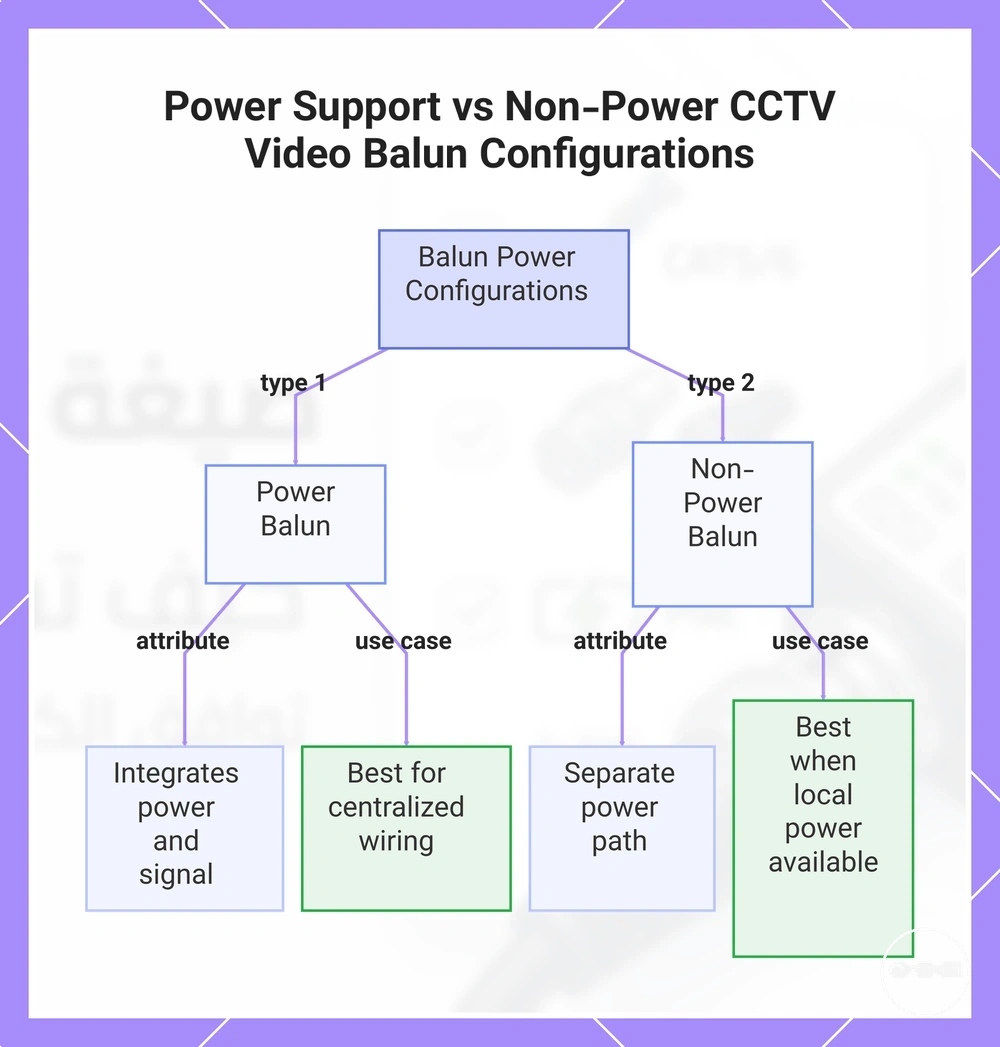
Power support in CCTV video balun systems depends on camera setup and installation distance constraints that determine how stable power delivery must be across a layout. A power balun configuration can integrate power delivery with video transmission, while non-power CCTV video balun setups rely on a separate power supply depending on system design and camera positioning needs.
Selection between these configurations depends on installation requirements, especially when evaluating how CCTV video baluns with power affect system layout decisions, power distribution, and overall wiring complexity in different deployment scenarios.
The key distinction between power balun and non-power setups lies in how power delivery is managed within the CCTV video balun system. Integrated power delivery combines signal and power through a shared path, while separate power supply setups keep electrical power independent from video transmission, which can influence installation distance planning and cable routing complexity.
In practical scenarios, power balun configurations may be preferred when centralized wiring simplification is required, while non-power CCTV video balun systems are often used when existing power sources are already available near camera setup points. The final choice typically depends on distance limitations, installation environment, and how power stability is managed across the system.
This chart compares power balun and non-power balun configurations, showing their key attributes and recommended use cases based on installation requirements.
Signal Format and Resolution Compatibility Considerations
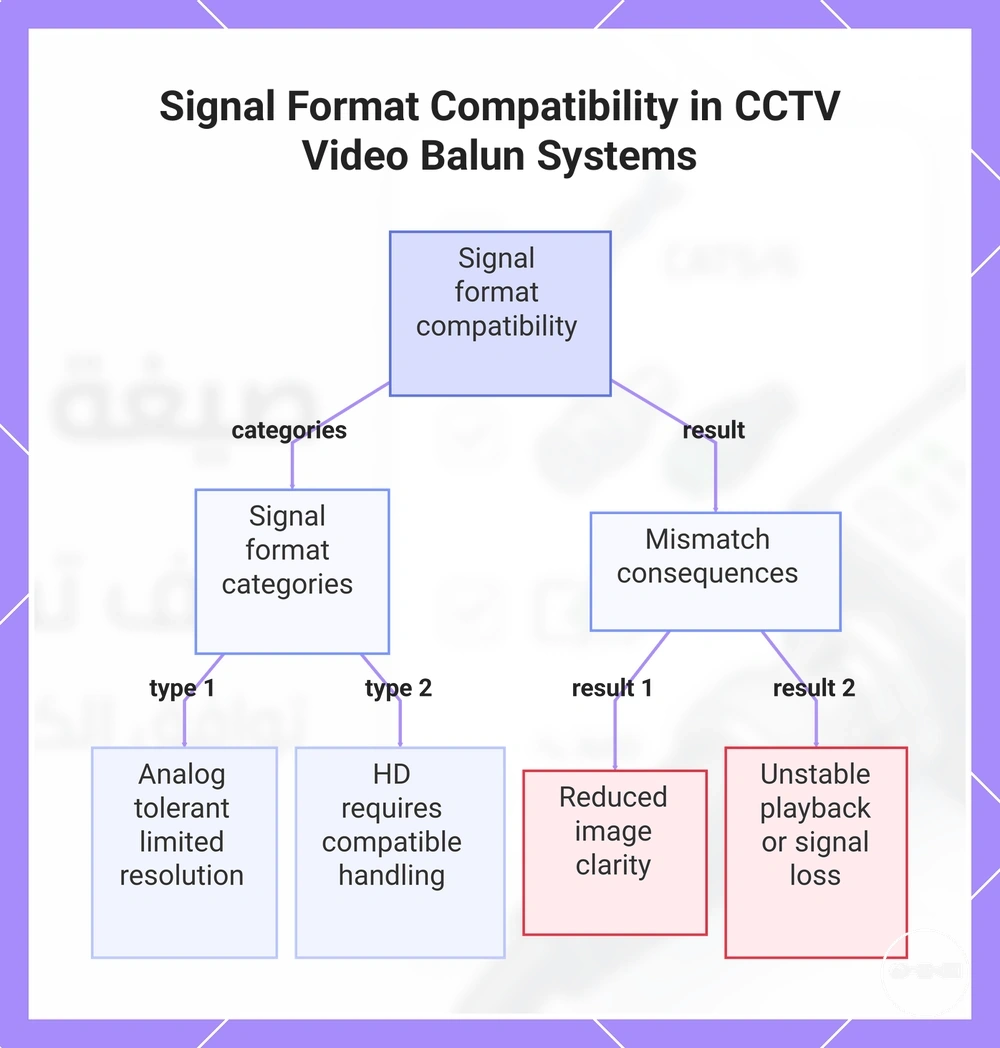
Signal format compatibility in a CCTV video balun system depends on whether the setup is handling analog or HD formats, since analog and HD signal types require different handling to maintain stable transmission and resolution compatibility. This dependency directly affects how a CCTV video balun interprets and carries video data across connected devices.
This dependency becomes more critical when assessing signal format compatibility in mixed installations where different camera technologies must align with recording device standards to maintain usable output.
CCTV video balun compatibility is typically evaluated across multiple signal format categories, where each format behaves differently in terms of resolution compatibility and system synchronization requirements.
- Analog: Standard definition format where CCTV video balun transmission is generally more tolerant but limited in resolution compatibility.
- AHD: HD-over-coax format requiring compatible system handling to preserve higher resolution signal integrity.
- TVI: High-definition format where compatibility depends on matching transmission and receiving device standards.
- CVI: HD format that requires consistent system alignment to maintain stable signal interpretation.
- HD variants: Higher-resolution formats that depend strongly on correct CCTV video balun pairing and device compatibility.
When formats are mismatched, a CCTV video balun may still pass a signal, but resolution compatibility issues can occur, including reduced image clarity, unstable playback, or partial signal loss depending on system configuration and device support levels.
This chart shows the main signal format categories and the consequences of mismatched formats in a CCTV video balun system.
Single-Channel vs Multi-Channel CCTV Video Balun Selection for System Scaling
Channel-based selection in a CCTV video balun system depends on how single-channel and multi-channel configurations affect scalability and wiring complexity during installation planning. The choice is driven by system size, since channel count directly changes how many video paths are managed and how complex the overall wiring structure becomes.
This comparison evaluates channel count decisions in CCTV deployments where system expansion planning and wiring complexity must be controlled according to installation scale and layout structure.
Single-channel and multi-channel CCTV video balun setups differ primarily in how video streams are distributed and how that affects scalability and wiring complexity across the system design.
Comparison overview:
| Type | Channel handling | Scalability | Wiring complexity |
|---|---|---|---|
| Single-channel CCTV video balun | Supports one video signal per unit | Typically used in smaller or incremental setups | Lower wiring complexity with simpler layout |
| Multi-channel CCTV video balun | Supports multiple video signals in one unit | More suitable for larger scalable systems | Higher initial planning density but consolidated wiring paths |
In smaller installations, single-channel configurations are often selected when the system grows gradually and wiring needs to remain simple per camera setup. In larger deployments, multi-channel CCTV video balun configurations may be considered when centralized handling of multiple camera feeds is preferred, especially when scalability planning requires reducing distributed connection points and organizing wiring complexity more efficiently.