
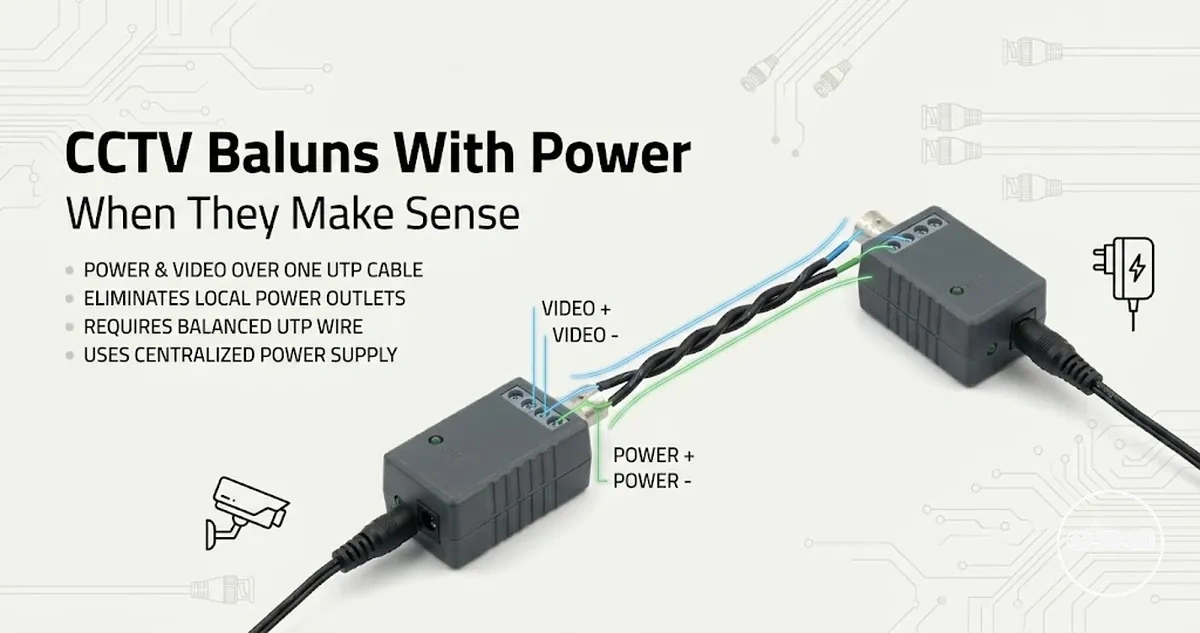
CCTV video baluns with power as a combined video-and-power transmission solution for CCTV systems
CCTV video baluns with power refers to a combined transmission approach where CCTV video baluns support both video signal delivery and power transmission within a CCTV system. This setup typically uses CAT5 cable and twisted pair wiring to carry video signal and electrical power through a shared infrastructure, reducing the need for separate lines for the video signal and power supply in suitable configurations.
The decision to use CCTV video baluns with power depends on the installation scenario, including the overall CCTV system design, available CAT5 cable infrastructure, and how the power transmission requirements align with distance and layout conditions. In many cases, twisted pair wiring can support simplified planning, but performance of both video signal stability and power supply delivery may vary depending on system design and environmental factors.
This section establishes a macro-level view of CCTV video baluns with power as a planning consideration in CCTV system design, focusing on when and why this combined approach is selected before moving into more detailed comparisons and functional definitions.
What CCTV video baluns with power are and how they differ from standard video balun setups
CCTV video baluns with power are a combined transmission component that carries both video signal and electrical power over twisted-pair cabling using CAT5 cable in a CCTV system. This setup supports both video signal delivery and power transmission through a shared cabling structure, depending on how the CCTV system and installation scenario are configured.
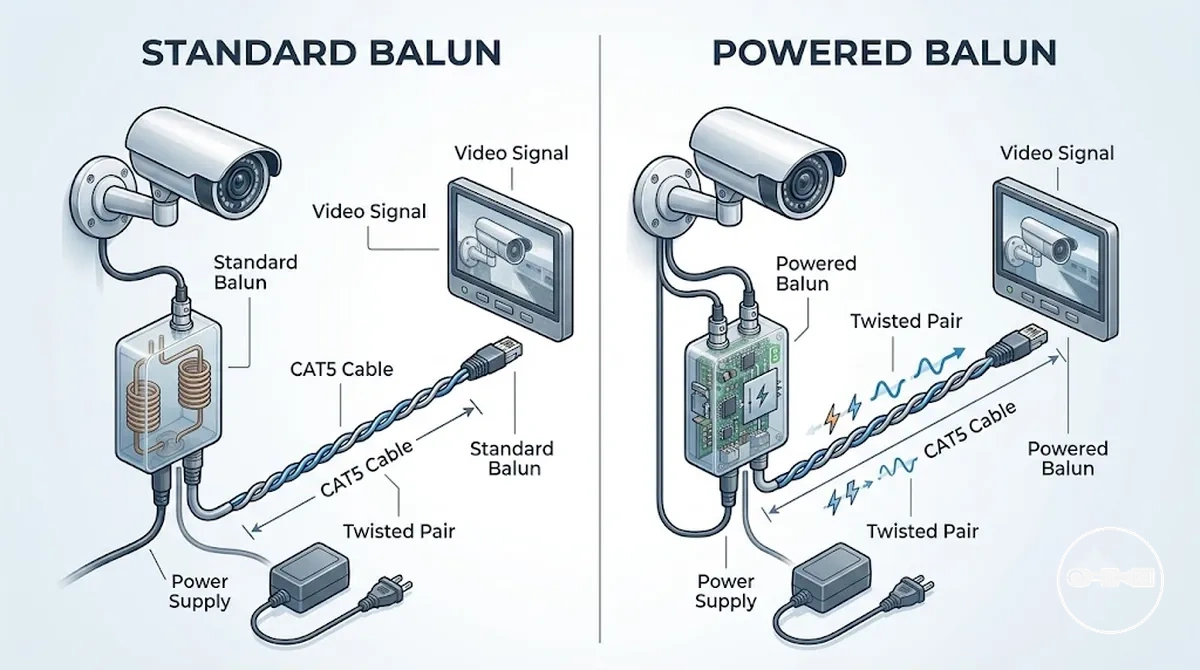
Compared with standard CCTV video baluns, which typically focus only on transmitting video signal over twisted pair, the powered version extends functionality by also supporting power supply delivery through the same cabling approach. This distinction becomes relevant when evaluating system requirements, especially in relation to installation planning and how power transmission is handled across the setup.
The main difference lies in system design priorities, where standard baluns focus on video signal transmission, while powered variants integrate both video signal and power supply considerations. The suitability of each option depends on CCTV system requirements, twisted pair cabling conditions, and how power distribution is planned in the installation scenario.
Video and power over CAT5 CCTV systems and how combined transmission works in practice
Video and power over CAT5 CCTV systems refers to a system-level setup where CCTV systems transmit both video signal and electrical power through CAT5 cable using twisted pair wiring. This combined transmission approach allows the video signal and power supply to coexist within the same physical cabling structure while still serving separate functional roles inside the CCTV system.
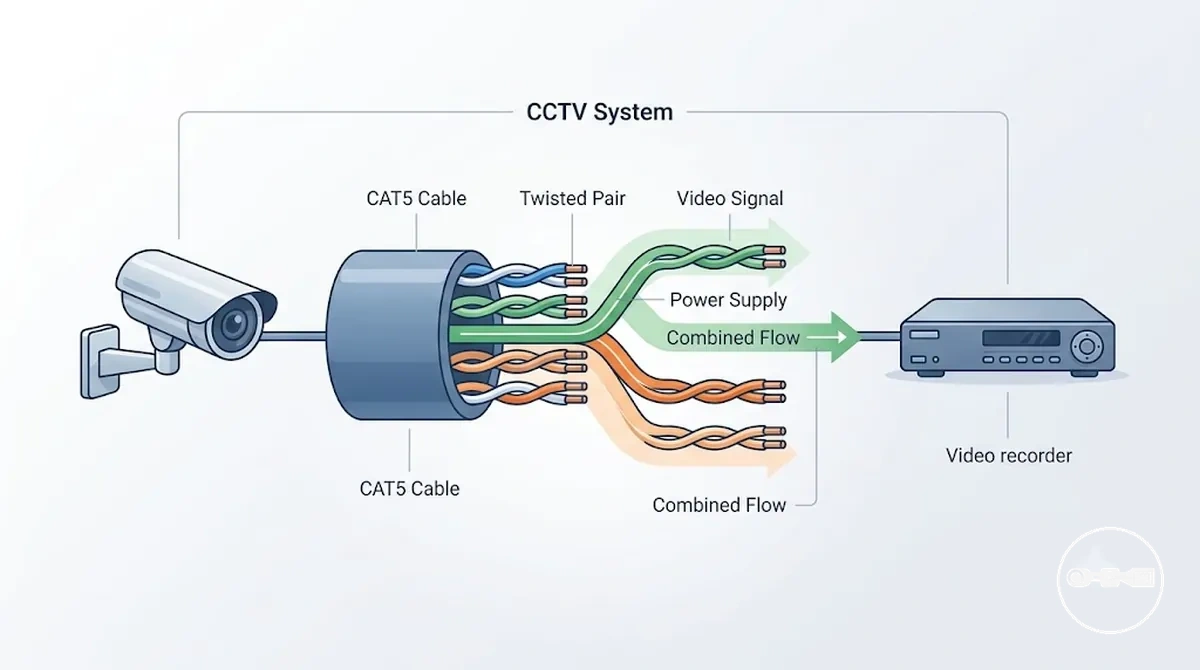
In practice, the combined transmission works by organizing how video signal and power supply are carried across twisted pair conductors within the same CAT5 cable. The CCTV system design determines how these flows interact, and stability may vary depending on installation scenario, cable quality, and overall system configuration that defines how power distribution and video signal transmission are balanced across the setup.
Passive video power balun systems and when passive configurations are used
Passive video power balun systems are non-amplified CCTV transmission devices where key attributes such as power handling, signal stability, and transmission quality depend on cable length, installation conditions, and overall system configuration. They carry video signals over twisted-pair CAT5 cabling and may support limited power transmission depending on how the CCTV system is designed.
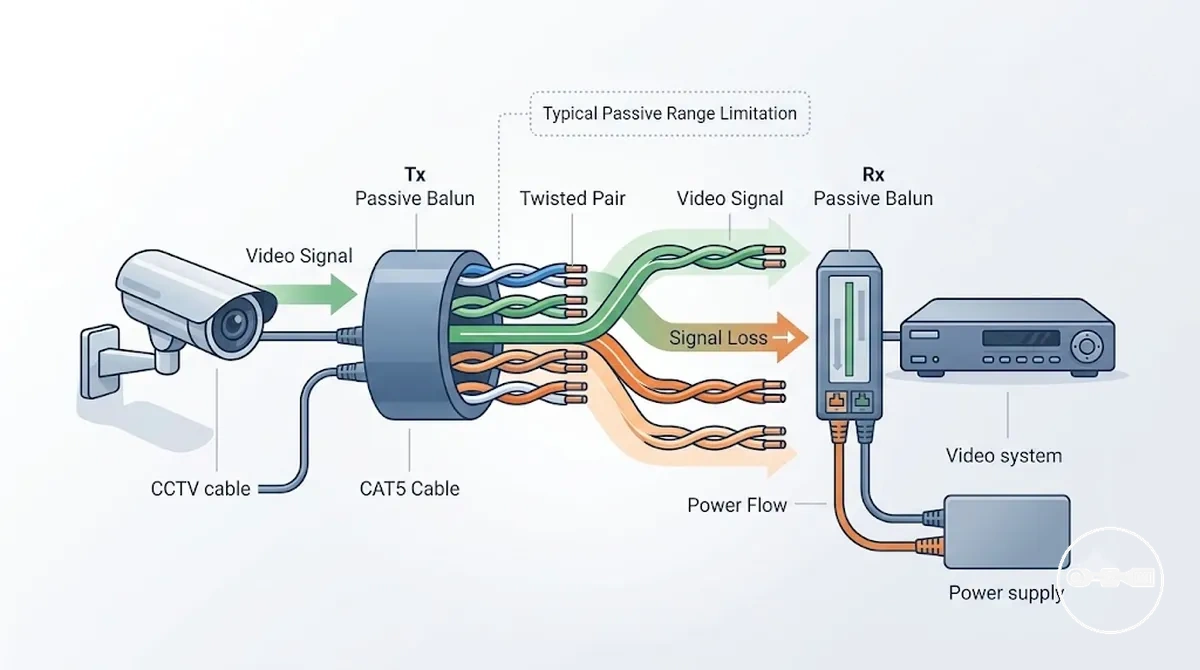
The main constraints of passive configurations relate to signal attenuation, voltage drop, and sensitivity to electrical interference because there is no internal amplification to stabilize transmission. As a result, performance depends heavily on external factors such as cable quality, routing distance, and how power is injected into the system, which can influence overall stability in different installation scenarios.
Passive video power balun systems are generally selected when system requirements stay within limited operating conditions and simpler layouts are involved, where external factors can be controlled more easily. In more demanding setups, they are often evaluated against other options such as active and passive CCTV video baluns to determine which configuration better matches installation constraints and system design needs.
CCTV balun power lead and power delivery methods in video power balun setups
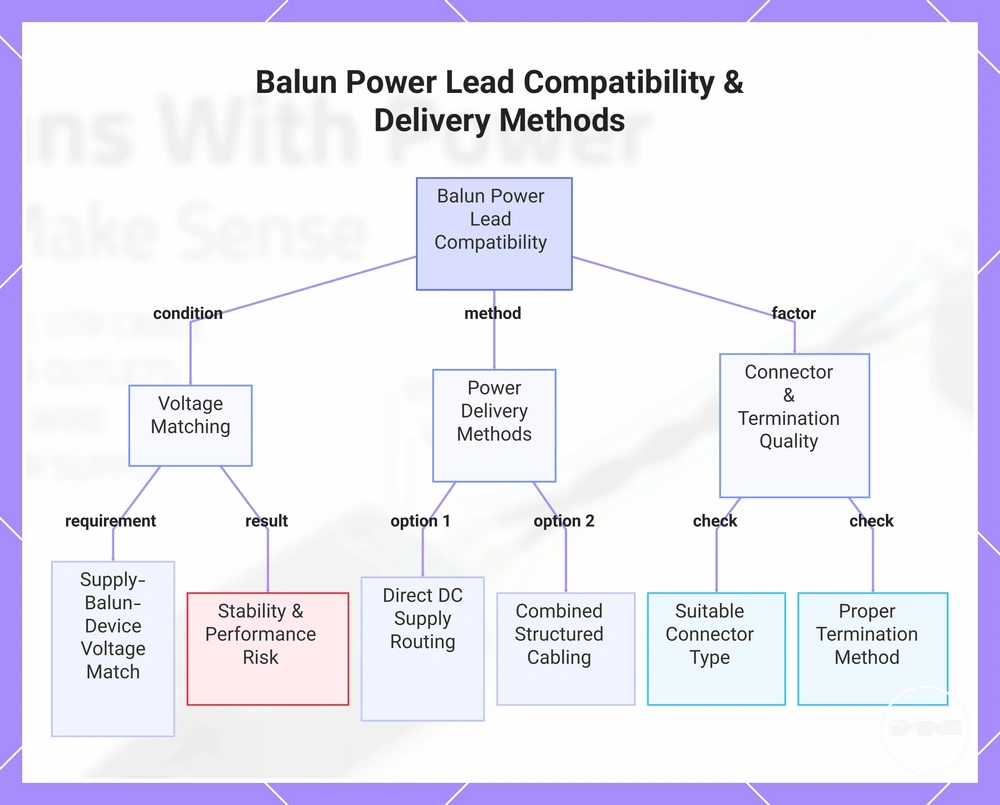
CCTV balun power lead compatibility depends on correct voltage matching between the power supply, the balun input, and the connected CCTV device, along with suitable connector type and termination method. When these conditions are not aligned, power delivery stability may vary and system performance can become inconsistent depending on installation setup.
Power delivery methods in video power balun setups typically vary based on how power is injected into the system, including direct DC supply routing or combined transmission through structured cabling paths. The overall behaviour depends on system design, cable conditions, and how power is distributed alongside the video signal within the CCTV architecture.
Connector selection and termination quality also influence compatibility, especially where different lead types are used in the same installation. More detailed considerations about integration can be reviewed through power lead and connector types, particularly when aligning voltage stability with correct physical connections in CCTV balun systems.
This chart shows the key conditions for CCTV balun power lead compatibility, including voltage matching, connector quality, and the two main power delivery methods.
Video power balun connection methods including wiring patterns and termination approaches
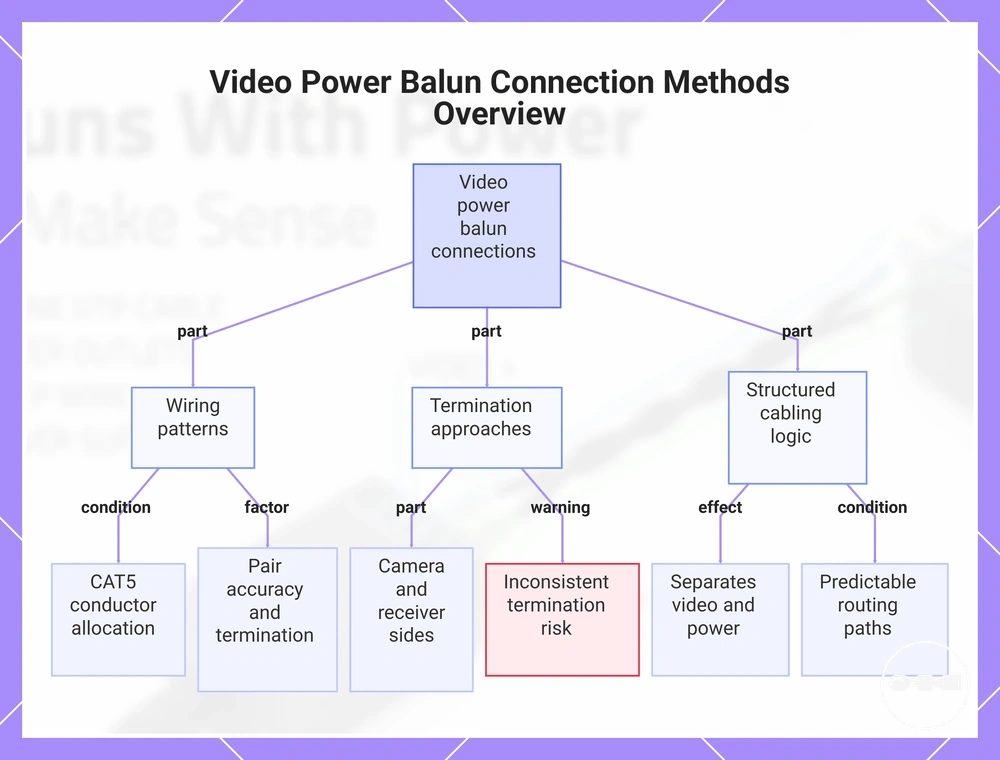
Video power balun connection methods refer to the structured way video signal pairs and power conductors are organized within CCTV twisted-pair cabling, where correct pairing and termination logic ensures consistent transmission across the system.
Wiring patterns in these setups depend on how CAT5 conductors are allocated between video transmission and power delivery, with performance stability typically influenced by how accurately pairs are maintained and how termination is applied at each endpoint.
Termination approaches determine how the cabling interface is completed at both camera and receiver sides, where inconsistent or mixed termination can introduce instability in signal behavior depending on layout and installation conditions.
Structured cabling logic in CCTV balun systems separates video pairs from power conductors to reduce interference risk, while maintaining predictable routing paths that support stable system behavior under normal installation constraints.
Installation context and wiring consistency often influence overall reliability, which is why structured methods are commonly aligned with general practices such as safe installation steps and detailed wiring references like wiring CCTV video baluns.
This chart shows the key components of video power balun connection methods: wiring patterns, termination approaches, and structured cabling logic, explaining how each contributes to stable CCTV transmission.
CCTV power balun distance limits and signal performance considerations over CAT5/CAT6 cable
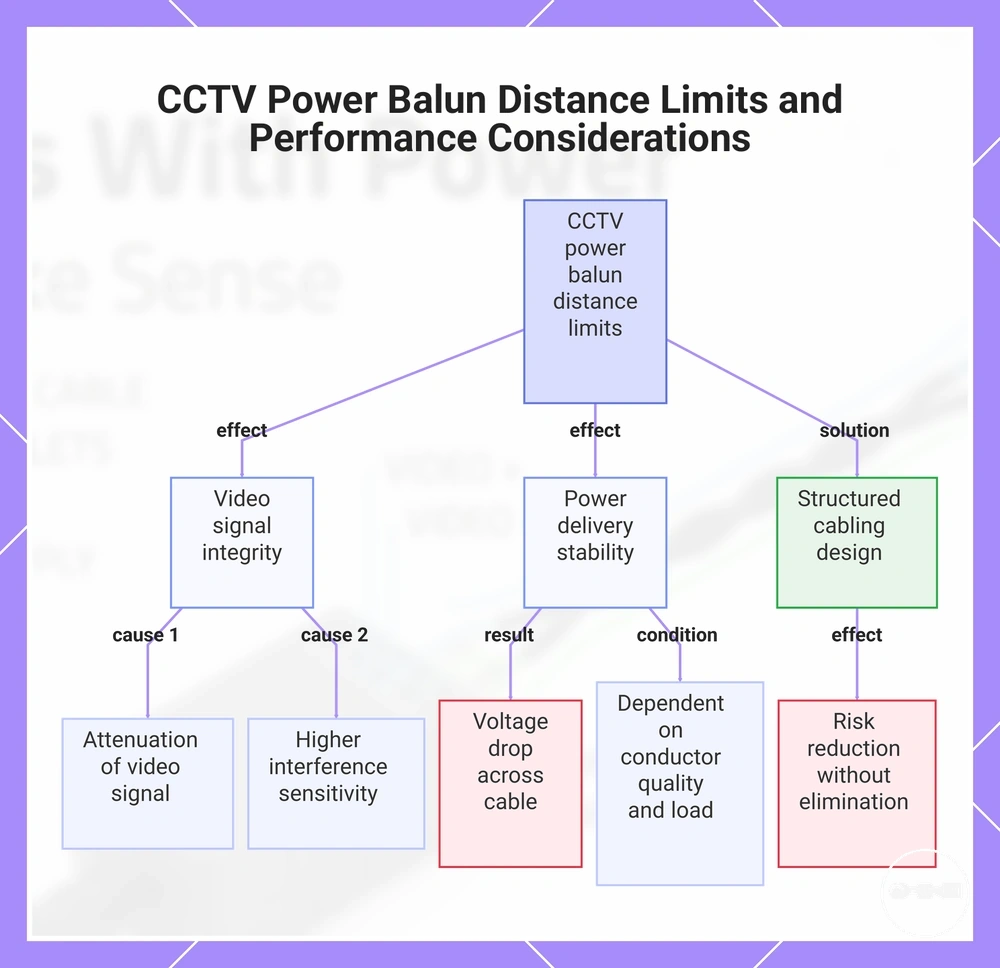
CCTV power balun distance limits depend on how cable length affects both video signal integrity and power delivery stability, where increased distance typically introduces greater attenuation and voltage drop across CAT5 or CAT6 cabling. :contentReference[oaicite:0]{index=0}
As distance increases, video transmission quality may gradually degrade due to signal weakening and higher sensitivity to interference, while power delivery can become less stable depending on conductor quality and system load conditions. These effects are conditional and vary with installation layout, cable grade, and overall system configuration.
Performance considerations over longer runs focus on maintaining acceptable balance between signal clarity and power efficiency, where structured cabling design and proper system planning help reduce degradation risks without eliminating them entirely.
For broader compatibility context, distance behavior is often evaluated alongside structured cabling categories and limitations described in cable distance limits, which influence how CAT5/CAT6 choices affect overall CCTV balun system performance.
This chart shows how increasing cable length affects video signal integrity and power delivery stability for CCTV power baluns, along with mitigation through structured cabling design.
System requirements, camera compatibility, and setup constraints for CCTV video baluns with power
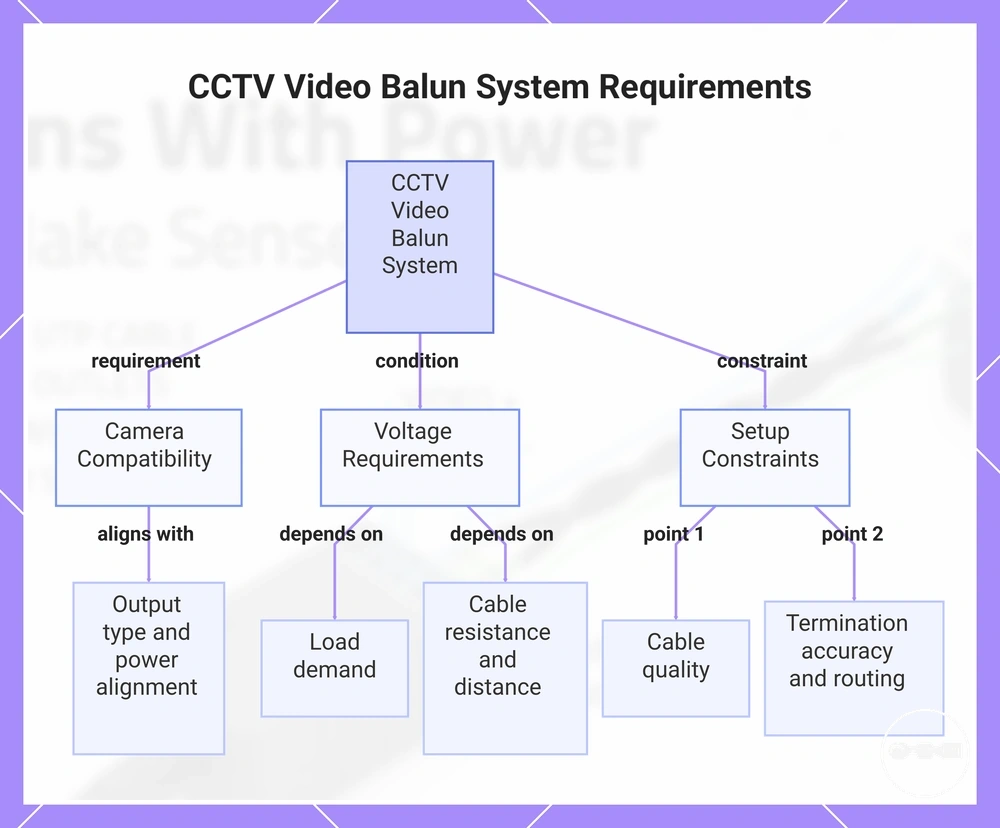
System requirements for CCTV video baluns with power depend on CCTV camera type, voltage needs, and cable condition, where each factor influences whether stable video transmission and power delivery can be maintained in a given installation setup. :contentReference[oaicite:0]{index=0}
Camera compatibility is determined by how the CCTV camera’s output type and power input align with the balun system, with variations in camera models affecting how consistently video signal and power can be carried over twisted-pair cabling.
Voltage requirements also shape system behavior, since power stability may vary depending on load demand, cable resistance, and distance, which can influence overall reliability in different installation conditions.
Setup constraints are typically linked to cable quality, termination accuracy, and routing conditions, where inconsistencies in these elements can affect overall transmission stability without changing the underlying system design.
This chart shows the key factors determining stable video and power transmission for CCTV video balun systems: camera compatibility, voltage requirements, and setup constraints.
How to choose CCTV video baluns with power based on distance, cable type, and installation scenario
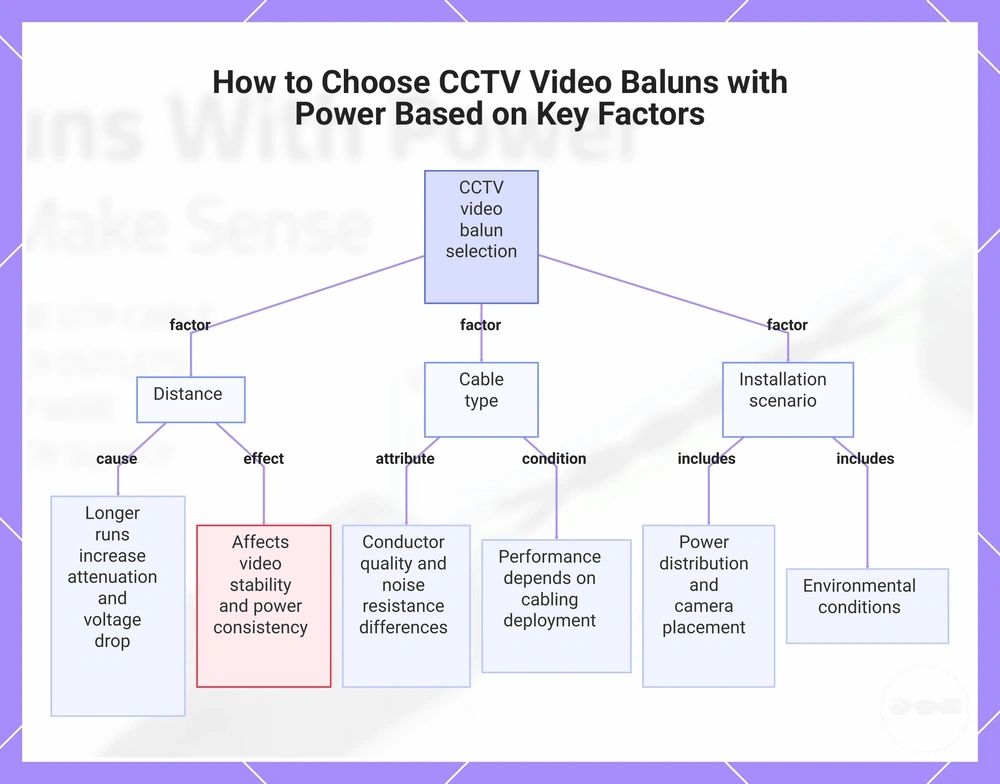
CCTV video baluns with power selection depends on distance, cable type, and installation scenario, where each factor influences how reliably video transmission and power delivery can operate in a given setup.
Distance is a primary constraint because longer cable runs can increase attenuation and voltage drop, which may affect both video stability and power consistency depending on the system load and installation conditions.
Cable type such as CAT5, CAT5e, or CAT6 can influence signal behavior through differences in conductor quality and noise resistance, meaning performance may vary depending on how the structured cabling is deployed in the CCTV layout.
Installation scenario also affects selection, especially where power distribution, camera placement, and environmental conditions influence system limits. Broader selection context can be aligned with CCTV video baluns buying basics and compared with system types such as active and passive CCTV video baluns to better match requirements.
This chart shows the three key factors for selecting CCTV video baluns with power: distance, cable type, and installation scenario, along with their specific effects and conditions.
Common wiring mistakes and signal issues in CCTV video balun with power installations
Wiring mistakes in CCTV video balun with power installations typically lead to signal loss, unstable video output, or inconsistent power delivery, especially when conductor pairing and termination are not correctly maintained.
Incorrect pairing of twisted wires is a frequent cause of signal degradation, where video and power lines may interfere if not properly separated within the CAT5 structure. Loose or inconsistent termination can also introduce intermittent signal drops and voltage instability across the system.
In some cases, reversed polarity or mismatched connections between balun units can result in partial or complete video failure, while poor cable routing may increase exposure to interference sources that affect transmission stability.
Proper wiring practices, including consistent pair alignment and secure termination, are essential for reducing these issues, as outlined in wiring CCTV video baluns.